
Buying Property in Latvia: The Complete Guide for Foreigners
Buying property in Latvia offers foreigners an accessible entry point into the European real estate market, combining relatively affordable prices with a transparent legal framework. This guide is based on the Civil Law of the Republic of Latvia and draws on current regulations governing real estate transactions, property registration through the Latvian Land Registry (Zemesgrāmata), and administrative procedures enforced by the State Land Service.
Want to hear what other clients
are saying about us?


Whether you're a UK citizen addressing post-Brexit restrictions, an EU national seeking a Baltic Sea apartment, or an investor evaluating Riga's residential market, this comprehensive overview clarifies the legal standing, procedural steps, costs, and strategic considerations that apply to foreign property buyers in Latvia.
Latvia's real estate laws are codified primarily in the Civil Law of the Republic of Latvia and administered through the Latvian Land Registry, a public cadastral registry maintained by the State Land Service (Valsts zemes dienests, VZD). Property ownership rights are recorded in the Land Book (Zemesgrāmata), and all transactions require notarisation and formal registration.
The legal framework distinguishes clearly between EU/EEA citizens and third-country nationals, with certain categories of land-agricultural land, forest land, and properties within state border zones-subject to restrictions for non-EU buyers.
1. Can Foreigners Buy Real Estate in Latvia?
Yes, foreigners can buy real estate in Latvia, but the scope of permissible purchases depends on citizenship and property type. The Civil Law of the Republic of Latvia grants property ownership rights to both natural persons and legal entities, regardless of nationality, with specific restrictions applied to certain categories of land.
EU/EEA citizens (including citizens of the European Union and European Economic Area member states, plus Swiss nationals) enjoy the same property rights as Latvian citizens. They may purchase residential property, commercial real estate, apartments, houses, and land plots without additional permits or restrictions. There are no limitations on ownership of urban land, new builds, renovated or unrenovated apartments, or commercial property in any municipality.
Non-EU/EEA citizens (including UK nationals following Brexit, US citizens, and other third-country nationals) face narrow but specific restrictions:
- Agricultural land and forest land: Non-EU citizens cannot purchase agricultural land or forest land directly. These categories are defined by cadastral classification and local land-use plans. Attempts to circumvent this restriction through nominee structures or indirect ownership may be challenged by authorities.
- State border zones: Properties located within designated state border areas (typically within a defined radius of Latvia's borders with Russia, Belarus, and certain coastal zones) are restricted to Latvian and EU/EEA citizens for national security reasons.
- Residential and commercial property: Non-EU citizens may freely purchase apartments, houses, and commercial real estate located in urban areas and designated municipal zones. Ownership of the building does not automatically confer ownership of the underlying land in divided estates, but non-EU buyers may acquire long-term leasehold rights (emphyteusis or build-up rights) over the land parcel if the property is classified as a divided estate.
Non-EU citizens (including UK nationals) cannot purchase agricultural or forest land directly. Violation of land acquisition restrictions may result in the invalidation of the purchase contract, compulsory sale of the property, or administrative penalties imposed by the State Land Service.
Can a British citizen buy property in Latvia after Brexit, and do I need residency first?
Yes, British citizens can buy property in Latvia without needing residency first. However, following Brexit, UK nationals are treated as third-country nationals and cannot purchase agricultural land, forest land, or properties in state border zones. The property purchase does not grant residency rights or exempt you from the 90-day Schengen visa limit.
Key points for UK buyers:
- No residency requirement for purchase: You can buy an apartment, house, or commercial property without holding a Latvian residence permit or temporary residence visa. The transaction may be completed remotely with a notarised power of attorney, though physical presence is recommended for due diligence and signing.
- Post-purchase stay: Owning property in Latvia does not exempt you from Schengen visa rules. UK citizens may stay in the Schengen Area (including Latvia) for up to 90 days within any 180-day period without a visa. If you intend to reside in Latvia long-term, you must apply for a national visa or temporary residence permit on separate grounds (e.g., employment, business, family reunification, or investment-based residence).
- Restrictions remain: UK citizens cannot purchase agricultural land, forest land, or properties in state border zones. These restrictions are enforced at the point of notarisation and cadastral registration, and notaries are required to verify citizenship and land classification before approving the transaction.
- Investment-based residency: While property purchase alone does not qualify for a residence permit, Latvia previously operated an investor residence programme (commonly referred to as a "Golden Visa") that allowed non-EU nationals to obtain temporary residence by investing in Latvian real estate above a certain threshold. This programme was suspended in 2022 and has not been reinstated. UK buyers seeking residency must explore other visa pathways.
Practical advice: If you plan to manage or renovate your Latvian property personally after purchase, consider applying for a national D-visa or temporary residence permit before the transaction closes, or ensure compliance with the 90/180-day rule through careful trip planning.
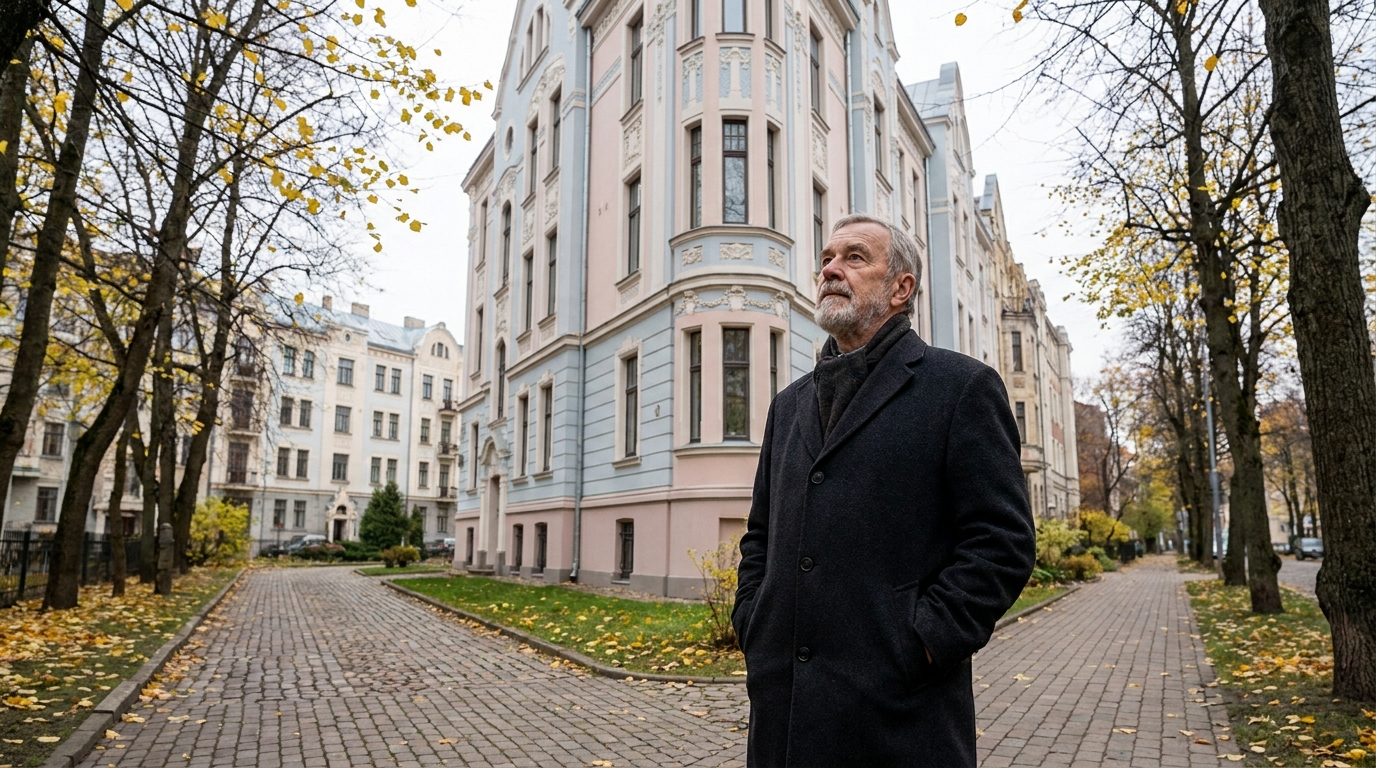
2. Where to Buy: Popular Latvian Locations for Expats and Investors
Latvia's real estate market is geographically concentrated, with the vast majority of foreign buyer activity focused on Riga and the nearby Baltic Sea resort town of Jūrmala. Secondary markets in regional cities such as Liepāja and Daugavpils attract smaller numbers of investors and remote workers, typically seeking lower prices or specific lifestyle environments.
This section provides a high-level overview of the primary markets; detailed neighbourhood analyses (e.g., Āgenskalns, Purvciems, Avoti, Vecrīga) are covered in dedicated location guides.
Riga is the capital and commercial centre of Latvia, home to approximately one-third of the country's population. The Riga real estate market is divided into primary market (new construction, including new builds and recently completed developments) and secondary market (existing apartments and houses, often in Soviet-era buildings or pre-war structures). Popular districts include:
- Centrs (Central District): High-value area encompassing Vecrīga (Old Riga), a UNESCO World Heritage Site with renovated Art Nouveau buildings, and Klusais centrs (Quiet Centre), a residential zone favoured by expats. Prices per square metre are the highest in the country, reflecting proximity to business districts, restaurants, and cultural amenities.
- Āgenskalns: A mixed neighbourhood on the left bank of the Daugava River, featuring wooden houses, Soviet-era apartments, and new developments. Popular with young professionals and families seeking a balance of affordability and proximity to the centre.
- Purvciems, Pļavnieki, and Teika: Large residential districts dominated by Soviet-era panel buildings (often referred to as "Khrushchyovkas" or "Brezhnevkas"). These areas offer the lowest prices per square metre in Riga but require careful evaluation of building condition, utilities, and planned maintenance.
- Mežaparks and Ķengarags: Suburban districts with detached houses, villas, and townhomes. Attractive to families seeking more space and greenery, though public transport connections and commuting time should be considered.
Jūrmala is Latvia's premier Baltic Sea resort town, located approximately 25 kilometres west of Riga. The market is characterised by luxury apartments, beachfront villas, and seasonal rental properties. Jūrmala's appeal lies in its coastal location, spa heritage, and proximity to Riga's airport and business centre. Property prices in Jūrmala are typically higher per square metre than in most Riga districts, reflecting demand from Latvian elites, Russian-speaking buyers, and international investors seeking rental yields from summer tourism. Zoning regulations in Jūrmala are more restrictive than in Riga, and foreign buyers should verify land classification and permissible use before purchase.
Regional cities such as Liepāja (a port city on the western coast), Daugavpils (Latvia's second-largest city, near the border with Belarus), and smaller municipalities offer significantly lower property prices, but also face weaker demand, limited liquidity, and fewer services for expats. These markets are more suitable for long-term residents, retirees, or buyers seeking land for agricultural or recreational use (subject to citizenship restrictions on agricultural and forest land).
Market dynamics: Latvia's real estate market experienced rapid price growth in the early 2000s, followed by a severe correction during the 2008-2010 financial crisis. Prices have recovered gradually since 2015, particularly in Riga and Jūrmala. According to data from the Central Statistical Bureau of Latvia, the median price per square metre for apartments in Riga was approximately €1,800-€2,450 as of 2023-2024, with significant variation by district, building age, and renovation status. The secondary market dominates transaction volume, with new construction representing a smaller but growing share. Foreign buyers should be aware that advertised prices often reflect unrenovated or partially renovated units, and additional costs for renovation, furniture, and building maintenance should be factored into budgets.
Rail Baltica: A major infrastructure project currently under construction-the Rail Baltica high-speed railway connecting Tallinn, Riga, and Warsaw-is expected to influence property demand in Riga and surrounding municipalities (including Babīte, Mārupe, Garkalne, Salaspils, Ķekava, and Ogre). Proximity to planned Rail Baltica stations may affect long-term appreciation potential, though completion timelines remain uncertain.

3. Understanding Property Costs, Taxes, and Fees
The total cost of buying property in Latvia includes the purchase price plus several mandatory fees and taxes set by the State Land Service (VZD) and regulated under the Civil Law of the Republic of Latvia. Buyers should budget for the state fee for title transfer (stamp duty), which is 2% of the declared cadastral value or purchase price, whichever is higher, capped at €142,300.
This fee is paid to the Land Register at the time of registration and is non-negotiable.
Notary fees vary depending on the property value and the complexity of the transaction, but typically range from 0.2% to 0.8% of the purchase price, plus VAT (21%). For example, on a €200,000 apartment, notary fees may total approximately €1,200-€1,600.
The notary fee covers identity verification, document preparation, submission to the Land Registry, and legal oversight of the transaction.
Real estate agent fees in Latvia are customarily paid by the seller, not the buyer. The standard agent commission is 3-5% of the sale price.
However, if the buyer uses a separate buyer's agent, that agent may charge a separate fee, which should be agreed in writing before engaging their services.
Additional costs include:
- Legal fees (if you engage a lawyer separately from the notary): typically €500-€1,500, depending on the scope of due diligence
- Translation costs (if documents need to be certified in English): approximately €50-€150
- Property appraisal fee (if required by a bank for mortgage financing): €150-€300
- Transaction account administration fee: usually €50-€100
Buyers should also factor in one-time costs after purchase, such as utility connection fees, property insurance, and any immediate maintenance or renovation expenses. These are not part of the legal transaction but are practical considerations when budgeting for the purchase.
What are the property tax and annual maintenance costs for homeowners in Latvia?
Annual property tax in Latvia is calculated based on the cadastral value (kadastrālā vērtība) of the property, not the market purchase price, as regulated under Latvian property tax legislation administered by the State Land Service (VZD). The cadastral value is determined by the State Land Service (Valsts zemes dienests) and is typically lower than the market value.
The annual tax rate ranges from 0.2% to 3.0% of the cadastral value, depending on the property type and the local municipality's rate.
For example:
- A residential apartment with a cadastral value of €50,000 in Riga may incur an annual property tax of approximately €100-€500, depending on the municipality's rate
- A detached house with a cadastral value of €100,000 may incur €200-€1,000 annually
- Undeveloped land is typically taxed at 1.5% of cadastral value
Property tax is assessed and collected by the local government (pašvaldība), and payment is typically required once per year. Owners receive a tax notice by mail or email.
In addition to property tax, owners of apartments in multi-family buildings pay monthly property management fees to the building's property management company (ēku apsaimniekošanas uzņēmums). These fees cover:
- Building maintenance and repairs (roof, stairways, elevators, façade)
- Utilities for common areas (lighting, water, heating for shared spaces)
- Administration and management services
- Reserve fund contributions for future capital repairs
Monthly management fees vary widely depending on the age, condition, and location of the building. In Riga, typical fees range from €0.50 to €1.50 per square meter per month. For a 60 m² apartment, this translates to approximately €30-€90 per month, or €360-€1,080 per year.
Owners are also responsible for their own utility costs (electricity, gas, water, internet), which are billed separately. In older, unrenovated buildings, heating costs can be significant during winter months, especially if the building lacks modern insulation.

4. Property Ownership and Residency Permits (Golden Visa)
Purchasing property in Latvia can be more than a real estate transaction-it may also function as a pathway to European residency for non-EU/EEA nationals. Latvia offers a Temporary Residence Permit program, often referred to as the "Golden Visa," which allows foreign investors who meet specific real estate investment thresholds to obtain renewable residency rights in the country.
To qualify, non-EU/EEA citizens must invest in residential property with a cadastral value of at least €250,000, or in commercial property in Riga or major municipalities with a cadastral value of at least €50,000. Additionally, applicants must pay a 5% state fee calculated on the cadastral value of the property.
This fee is non-refundable and separate from notary costs, registration fees, and taxes.
The application is processed by the Office of Citizenship and Migration Affairs (PMLP). Applicants must submit a notarised application, proof of property ownership registered in the Land Register (Zemesgrāmata), evidence of payment of the state fee, and documentation demonstrating legal funds and compliance with Latvian law.
Processing times typically range from 30 to 60 days following submission of a complete application.
Approved applicants receive a temporary residence permit valid for five years, which can be renewed if the property investment is maintained. Permit holders may reside in Latvia and travel visa-free throughout the Schengen Area for up to 90 days within any 180-day period, but the permit itself does not grant unrestricted freedom of movement or employment rights in other EU member states.
After five years of legal residence, permit holders may be eligible to apply for permanent residency, subject to meeting language and integration requirements.
Legal note: The Golden Visa does not exempt investors from property tax obligations, real estate tax on rental income, or capital gains tax upon sale. Additionally, the residence permit is tied to continued ownership of the qualifying property. Selling or transferring the property before obtaining permanent residency may result in the revocation of the permit.
Investors should also be aware that Latvia has increased scrutiny of residence permit applications following European Commission recommendations on investor migration programs. The PMLP may request additional documentation to verify the source of funds, applicant background, and intent of residency.
Working with an independent lawyer experienced in immigration and real estate law is strongly recommended.
Can I get residency in Latvia if I buy a house?
Property purchase alone does not automatically grant residency in Latvia. You must meet specific investment thresholds—residential property with a cadastral value of at least €250,000, or commercial property in Riga valued at minimum €50,000—and then apply separately to the Office of Citizenship and Migration Affairs (PMLP) for a Temporary Residence Permit. The permit is granted only after application approval, not at the point of purchase. The cadastral value is the officially assessed value recorded in the Land Register, which may differ from the market price or purchase price stated in the sale agreement.
In addition to the property investment, you must pay a 5% state fee on the cadastral value, submit a complete application to the Office of Citizenship and Migration Affairs (PMLP), and provide documentation proving legal acquisition of funds, clean criminal background, and compliance with Latvian property ownership regulations.
The residence permit granted under this program is a Temporary Residence Permit valid for five years and renewable, provided the property investment is maintained. It does not automatically lead to citizenship, employment authorization in other EU countries, or exemption from tax obligations in Latvia.
For detailed guidance on the application process, required documents, timelines, and legal obligations, refer to our dedicated support article on Latvia's Golden Visa program and consult with a qualified immigration lawyer before initiating the purchase.

5. How to Find Trustworthy Real Estate Professionals
Hire an independent English-speaking lawyer first, verify all professionals' credentials with Latvian authorities, and prioritize professionals with documented expat transaction experience. Working through the Latvian property market as a foreign buyer requires engaging qualified, licensed professionals who understand both local regulations and the needs of international clients. Building a reliable transaction team is essential to conducting proper due diligence, avoiding legal pitfalls, and ensuring a smooth title transfer.
Hiring an independent English-speaking lawyer is the most important step. Unlike in some countries, Latvian real estate agents do not typically provide legal advice or contract review services. A qualified lawyer will conduct a full legal analysis of the property, verify ownership records and encumbrances in the Latvian Land Register (Zemesgrāmata), review the purchase and sale agreement (Pirkuma Līgums), confirm compliance with zoning and land use regulations, and advise on tax obligations and residency permit eligibility if applicable.
When selecting a lawyer, prioritize professionals with experience in real estate transactions involving foreign buyers. Request references, confirm their registration with the Latvian Bar Association, and clarify fee structures in advance.
Legal fees for property purchases typically range from €500 to €1,500 depending on transaction complexity, but this investment significantly reduces the risk of fraud, hidden liens, or disputed ownership.
Working with a licensed real estate agent can help identify suitable properties, arrange viewings, and provide market insights. However, agents in Latvia typically represent the seller's interests unless you engage a buyer's agent under a separate agreement. Always verify that the agent holds a valid license and is registered with a recognized professional body. Be cautious of agents who pressure rapid decisions, discourage independent legal advice, or are reluctant to provide full property documentation.
A notary public (sworn notary) plays a mandatory and neutral role in the title transfer process. The notary verifies the identities of both parties, confirms that the purchase agreement complies with Latvian law, ensures that the property is free of undisclosed encumbrances, and registers the change of ownership in the Land Register.
Notary fees are regulated by law and typically amount to 0.5% to 2% of the purchase value, depending on the property type and transaction structure.
The notary cannot be selected freely by the buyer or seller alone-both parties must agree on the choice. The notary does not represent either party and will not provide strategic advice or negotiate terms on your behalf.
All documents presented to the notary must be translated into Latvian if originally in another language, and translations must be certified.
Due diligence checklist for working with professionals:
- Verify lawyer credentials with the Latvian Bar Association
- Request written fee agreements and scope of services from all professionals
- Confirm the real estate agent's license status and professional registration
- Ensure all contracts and agreements are reviewed by your independent lawyer before signing
- Obtain official extracts from the Land Register directly or through your lawyer
- Do not rely solely on documents provided by the seller or agent
- Confirm that the notary has access to the updated Land Register records at the time of closing
- Retain copies of all notarised documents and registration confirmations
Unauthorized or fraudulent representation in real estate transactions is a criminal offense in Latvia. Always verify the identity and credentials of any professional claiming to act on your behalf. Do not transfer funds or sign documents without independent legal confirmation of their validity. If you suspect fraud or misrepresentation, contact the PMLP, the Latvian police, or your country's consular office immediately.
Foreign buyers should also consider engaging a property management company if they do not plan to reside in Latvia full-time. Property managers can handle maintenance, tenant relations, tax filings, and compliance with local regulations. Choose a company with transparent pricing, verifiable client references, and experience managing properties owned by non-residents.
Building a trustworthy team of professionals-lawyer, agent, notary, and property manager-is not optional due diligence. It is the foundation of a legally sound and financially secure property transaction in Latvia.
Want to hear what other clients
are saying about us?