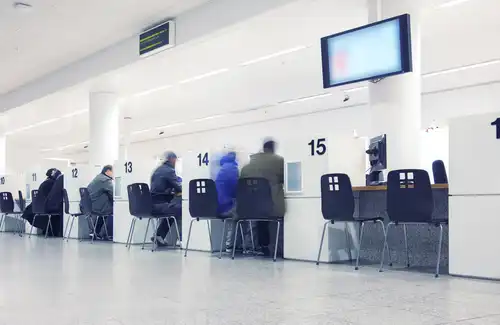


That confirmation email from L'Eliana's town hall — every family member correctly listed on the empadronamiento (the municipal residents' register), owner authorisation accepted, utility bills verified, and your TIE card (Tarjeta de Identidad de Extranjero — the biometric residency card for non-EU nationals) appointment already booked — is the moment your Spanish life actually begins. It means school enrolment, health card applications, and your Spanish bank account can all move forward on schedule, without a last-minute rejection sending you back to square one.
Working with a lawyer in L'Eliana who knows exactly how the town hall processes these submissions, what Valencia's Extranjería (the regional immigration office) currently expects, and how your documents need to be formatted before they are handed over is what gets you to that moment without wasted weeks.
Why L'Eliana Creates Specific Legal Risks You Won't Find in a City Centre
The administrative bottlenecks that catch foreign residents off guard in this part of Valencia province tend to cluster around a specific set of failure points — not because the rules are unclear, but because national immigration requirements, Valencia's regional administrative standards, and L'Eliana's own municipal processes do not always move at the same pace as a family's school-year arrival deadline:
- Empadronamiento rejections at L'Eliana's town hall when the name on the property deeds or lease agreement does not exactly match the documentation submitted, or when owner authorisation letters are missing the correct accompanying evidence.
- Sworn translation failures — criminal record certificates, marriage certificates, and proof-of-income statements rejected because the translator is not on the official Spanish register or because the apostille format does not meet Valencia's current local standard.
- Catastro mismatches — older urbanización chalets in the municipality frequently carry unregistered extensions, pool enclosures, or basement conversions that create a damaging gap between the Catastro (the government's physical property and tax registry) entry and the Land Registry title, which can cause a mortgage lender to withdraw or a notary to halt the signing.
- TIE card delays that lag several weeks behind school enrolment and health card deadlines, leaving families in a gap period with no formal proof of residency status.
- Cross-border document chains — income statements, foreign marriage certificates, and criminal records that arrive in the wrong format or without the correct apostille, and are rejected outright by local offices with limited flexibility on resubmission timelines.
Only a lawyer who works within this specific municipal and regional environment — and knows how L'Eliana's town hall, Valencia's Extranjería, and the local Notaría (notary's office) each apply their own standards — can pre-empt these problems before they cost you weeks of your timeline.
Immigration, Visas & Residency
The visa application itself is rarely where things go wrong. The real risk sits in the administrative chain that follows: an empadronamiento rejected because the deeds name the previous owner, a criminal record certificate refused because the apostille format does not meet Valencia's current standard, or a TIE card appointment booked so far out that it falls weeks after your child's school enrolment deadline. These are not edge cases — they are the standard failure pattern for non-EU families arriving in L'Eliana without targeted local support.
Francisca pre-validates every document against current Extranjería and municipal requirements before a single submission is made, structures non-lucrative visa applications, digital nomad visa applications, self-employed pathways, and regularisation applications to the 2026 programme with the exact supporting bundle that local offices expect, and coordinates the empadronamiento and TIE timeline so that no administrative dependency is left unresolved when your family needs to move forward.
To review her background and find out how she approaches these cases, view the profile of Francisca.
Property Law & Conveyancing
Older chalets across L'Eliana's urbanizaciones (established residential villa developments) frequently conceal decades of incremental additions — a covered terrace here, a pool enclosure there, a basement room that was never declared — creating a damaging gap between what the Catastro records, what the Land Registry title says, and what actually stands on the plot, meaning potentially:
- A mortgage lender can withdraw at valuation stage.
- A notary can pause the signing.
- A future buyer can use the discrepancy to demand a significant price reduction.
None of these outcomes announce themselves early; they surface at exactly the wrong moment.
Francisca conducts a full pre-purchase cross-audit of Catastro coordinates, Land Registry entries, and municipal planning records before any offer is formalised. Where undocumented additions are identified, she initiates the declaración de obra antigua process — the formal legalisation route for older, time-expired unauthorised works — in advance of the signing, so that the title transferred is accurate and resale-ready.
You can read more about buying a house in Valencia to understand how the regional conveyancing process works before your first viewing.
Inheritance, Wills & Succession
British and Northern European villa owners in L'Eliana frequently hold Spanish property under title arrangements that do not map cleanly onto their home-country estate plans. Valencia has its own regional inheritance tax framework — distinct from the national baseline — and the application of EU Succession Regulation 650/2012 for cross-border estates means that a will drafted without explicitly designating the applicable law can leave your heirs facing a probate dispute across two jurisdictions simultaneously. A generic will, however well-intentioned, will not prevent that outcome.
Francisca drafts Spanish wills that are specifically structured to function across both the Spanish and home-country legal frameworks, designating the applicable law clearly and accounting for Valencia's regional inheritance tax rules so that the estate can be administered without stalling in a multi-jurisdiction dispute or triggering an unexpected Valencian tax liability. You can also review the broader picture of succession tax in Spain to understand how national and regional rules interact before taking advice.
Family Law
International couples and separated parents living in the Valencia province face a layer of complexity that purely domestic cases do not carry: which country's courts have jurisdiction, how a foreign divorce decree gets registered in Spain, and what happens when one parent wants to relocate to the UK, Germany, or Latin America with the children. These are not abstract questions — they determine whether a custody arrangement is enforceable and whether a child can be removed from Spain without triggering proceedings under the Hague Convention on international child abduction.
Francisca handles divorce proceedings in Spain, modifications to child support and alimony agreements, parental relocation risk assessments, and applications under the Hague Convention framework. For families managing the division of a jointly owned villa alongside the separation itself, understanding how property assets are treated in a Spanish divorce is an essential early step.
Ready to Move Forward in L'Eliana?
Your documents, your timeline, and your circumstances in L'Eliana are specific — and the answers you need have to be just as specific. Whether your empadronamiento is stalled, your conveyancing has hit a Catastro discrepancy, or your succession planning needs to work across two countries, the right support is available here in L'Eliana.
Get in touch today to speak directly with Francisca and get clear, straightforward advice — with transparent fees from the outset — so your plans stay on track.